Last week at this time fighting broke out between Iran, Israel, the United States, and more across the Middle East. Swift US military action on Friday night brought about another change in a foreign government, this time bringing Iran under intense pressure. The unfolding conflict is disheartening on many levels, particularly those with friends and family serving in uniform. I will attempt to provide some amount of clarity on the ongoing situation. For those investors curious about the ramifications of conflict in the Middle East, we’ve been here before; but let’s explore this specific situation.
The situation in Iran is a reminder that markets do not just price earnings, payrolls, and Fed meetings. They also price shipping lanes, oil flows, and the risk that regional conflicts escalate, adding another layer of uncertainty. This is the core of the Iranian headlines. Iran’s geography gives it leverage in the Strait of Hormuz, where roughly 20% of global oil and liquefied natural gas normally pass this narrow waterway that connects the Persian Gulf to the Indian Ocean, or the rest of the world:
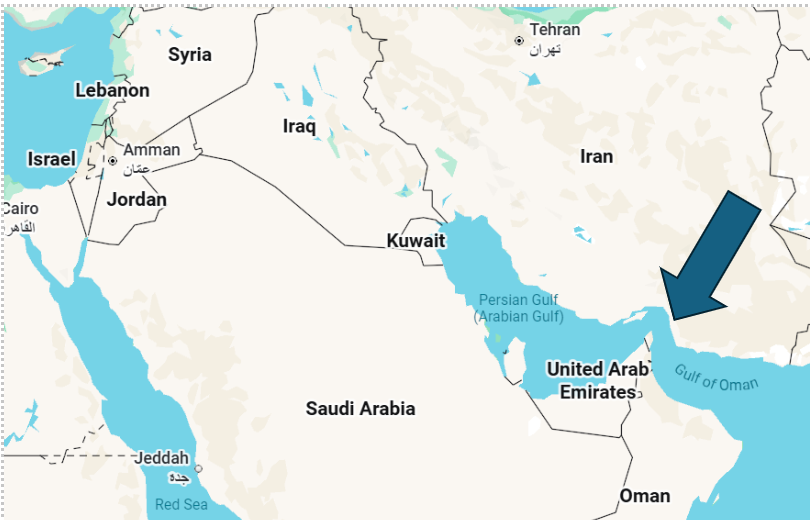
Any disruption to traffic through the Strait naturally raises concerns about global energy supply. As a result of the fighting and escalating tensions, oil tanker traffic in the region has come to a screeching halt. As the chokepoint looks vulnerable to attacks, insurers and re-insurers are no longer comfortable underwriting voyages through the Strait, making it impossible for cargo ships to move freely about towards their ports of destination. The result is visible in the data and in real time:
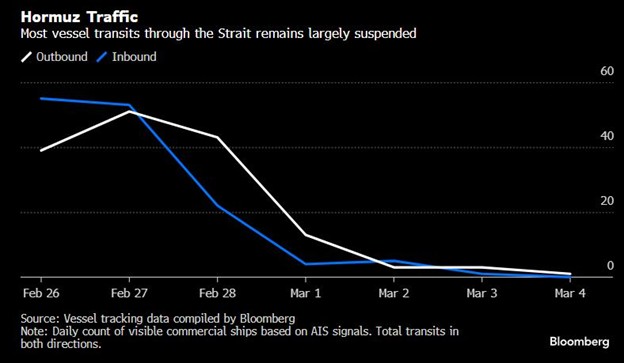
This chart shows almost zero vessel transits through the Strait. Here’s a map of current tankers on either side of the Strait:
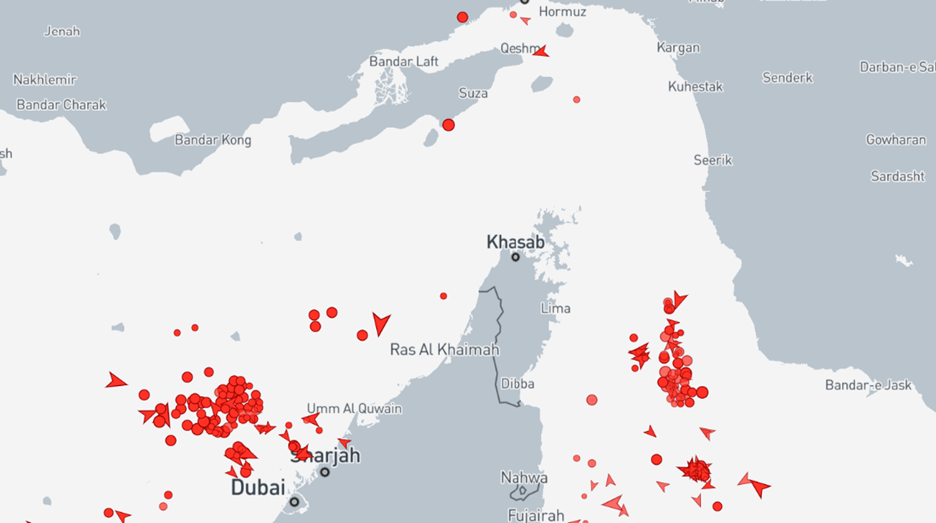
The red circle dots are tankers that have no current course direction. They sit idle awaiting clarity before hopefully continuing their routes.
For markets, this creates a chain reaction. When energy flows are threatened, we must re-assess oil supply, inflation expectations, and overall risk appetite. The re-pricing has been swift. Crude oil prices and gasoline futures have risen 30% since the conflict started and are up 50% on the year. Treasury yields are up 5-10% across the curve. Treasury volatility is rising after several months of hibernation.
This is the point where the White House narrative runs into reality. President Trump has repeatedly argued that lower oil prices are critical to combat inflation and create room for the Fed to lower interest rates. For much of 2025, that strategy was successful. Energy prices had fallen to levels not seen since before the Russia–Ukraine war, helping ease inflation pressures. However, this week’s sharp rise in oil prices threatens to undo much of that progress. During the 2024 campaign trail, oil prices traded between $70 and $90 per barrel, almost exactly where they sit today after the recent surge. With this week’s breakout in oil prices, Trump has undone much of the progress he’s made in just a few days.
Though the fog of war may be difficult to see through, this provides the most clarity to investors on the situation. The longer oil prices remain elevated, the more difficult it becomes to maintain low inflation and further cut interest rates. In my opinion, this is Trump’s breaking point over the conflict, and recent evidence suggests he understands this dynamic. Last Thursday, Trump publicly called on Iran to lay down their weapons signaling a possible near-term end to the conflict. The administration and the oil aboard the cargo ships sitting stalled in the Middle East would benefit greatly from a swift resolution so that the risk of re-inflation doesn’t come back around.
Still, long-term investors should be careful not to mistake unsettling headlines for a broken investment outlook. History argues for discipline. During the last two Gulf Wars, the S&P 500 enjoyed fruitful rallies in the three and six months post initial Middle East event headlines:
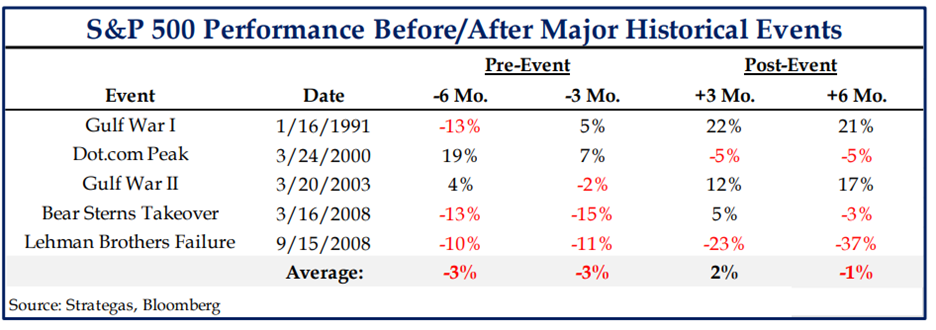
Military conflicts are difficult topics, but ones we must discuss. For disciplined investors, the lesson remains the same: periods of uncertainty are rarely the time to abandon a long-term investment strategy. More often, they are moments when patience and discipline are most rewarded.
Enjoy the rest of your weekend!
-Matt
Sources: Bloomberg, Google Maps, Marine Vessel Traffic, Strategas
This communication and its contents are for informational and educational purposes only and should not be used as the sole basis for any investment decision. The information contained herein is based on publicly available sources believed to be reliable but is not a representation, expressed or implied, as to the accuracy, completeness, or correctness of said information. References to political figures or policies are for informational purposes only and do not represent an endorsement by Waddell & Associates. Any forward-looking statements reflect current opinions and assumptions and are subject to change without notice; actual results may differ materially. Past performance does not guarantee future results. Waddell & Associates may use artificial intelligence tools to help generate or summarize content; all outputs are reviewed by our team for accuracy and relevance.