The month of May is one of the biggest times of the year in my hometown in central Indiana. The racing world turns its attention to the Indianapolis 500, commonly held on the Sunday of Memorial Day weekend. Thirty-three drivers push speeds approaching 230 miles per hour with one goal: survive 500 miles of straightaways and left turns better than everyone else.
Every driver can go fast, but the winners rely on optimizing car balance and race strategy to navigate the track. Low downforce and you’ll struggle in the turns. Poor tire strategy and you’ll lose speed. Investing is no different, and my sport correlations don’t end! Let’s explore.
Two-Legged Stool
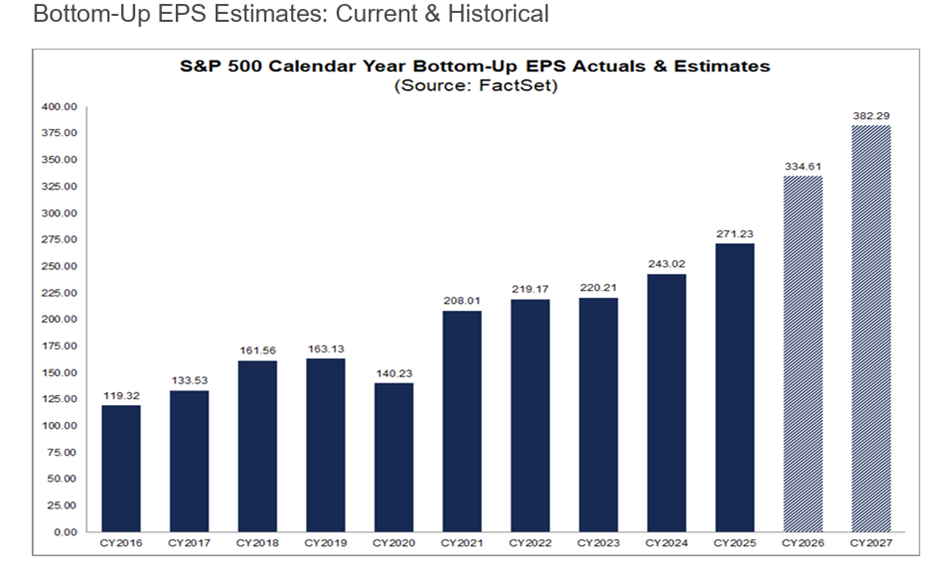
For the last several weeks, investors have enjoyed fruitful returns fueled by robust corporate earnings data and increasing forward earnings estimates. A 2026 full year S&P 500 bottom-up earnings estimate of $334 and a 4.5% 10-year treasury yield nets a fair value for the S&P at 7,544. The index sits right near this mark as of Friday.
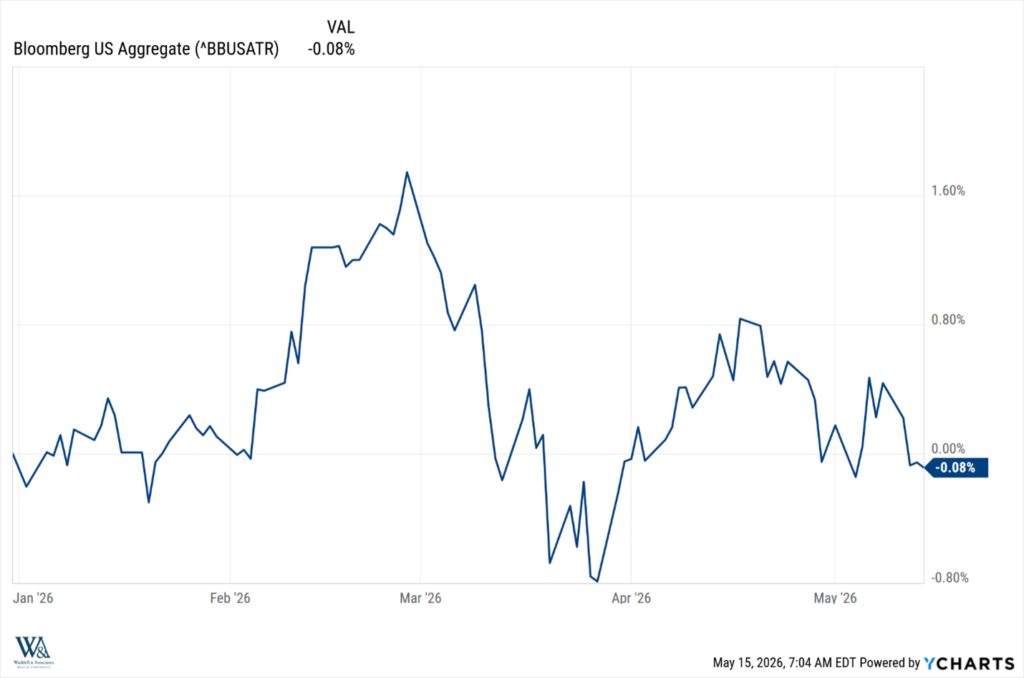
However, bond yields have continued their rise this year, with the 10-year Treasury reaching its highest level in more than a year. This has created downward pressure on bond total returns, which remain negative year-to-date in the U.S:
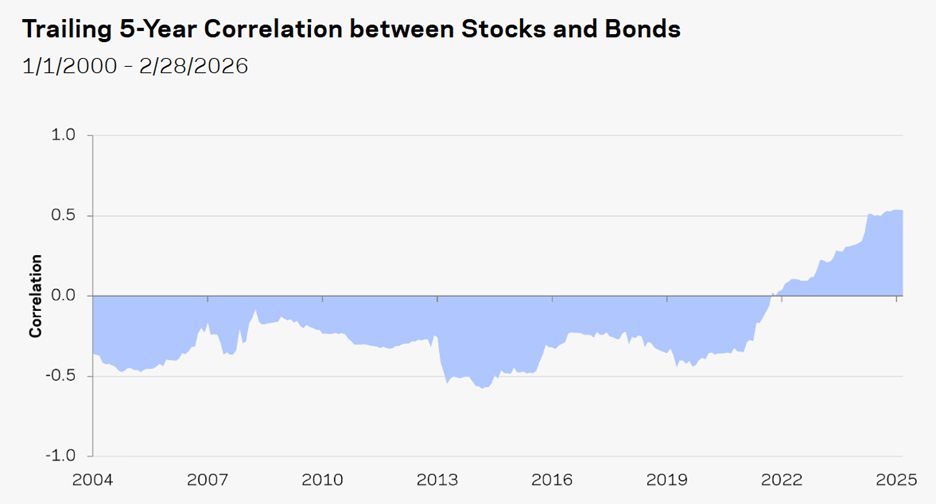
For decades, investors have relied on the classic “two-legged stool” of stocks and bonds. Stocks can provide growth, while bonds can offer income and downside protection. But recent market environments have exposed an important reality: sometimes both legs wobble at the same time.
In 2022, for example, both stocks and bonds declined together as rising interest rates pressured traditional asset classes simultaneously. Investors learned that bonds alone do not always provide protection when correlations rise. The chart below highlights how stocks and bonds have behaved more similarly in recent years:
That is where liquid alternatives can serve as the portfolio’s third engine.
Liquid alternative strategies are designed to generate returns that are less dependent on the direction of traditional markets. Instead of simply riding markets higher or lower, these strategies seek opportunities through different approaches and can have lower correlation to stocks and bonds. Think of liquid alternatives as the pit crew of a portfolio. They are not responsible for driving the car at top speeds, but when markets become volatile, correlations spike, or economic conditions suddenly change, they can provide critical balance and stability.
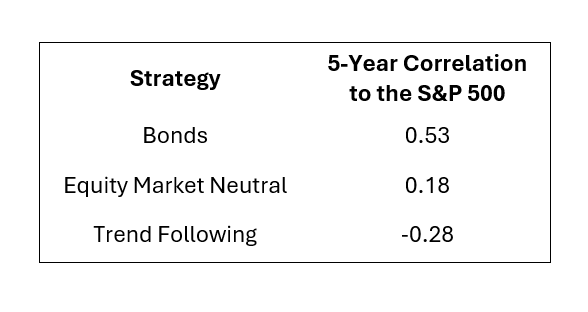
For a brief example, here is a chart of the same five-year correlation of returns comparing bonds, equity market neutral, and trend-following strategies relative to the S&P 500. The closer the number to 1, the more similar the assets behave. Notably, bonds have recently shown a higher correlation to stocks than these select alternative strategies.
Of course, diversification and risk management are the primary focus here, but investor returns matter as well. Importantly, liquid alternatives are not intended to replace stocks and bonds. Just as racecars require speed and durability, portfolios can benefit from growth and income-producing investments. Alternatives are designed to complement those core holdings by adding diversification from strategies that operate differently. The objective is not to eliminate risk but to build a more resilient portfolio capable of navigating changing market conditions.
Have a great week!
-Matt
Sources: FactSet, YCharts, AQR Capital Management
This communication and its contents are for informational and educational purposes only and should not be used as the sole basis for any investment decision. The information contained herein is based on publicly available sources believed to be reliable but is not a representation, expressed or implied, as to the accuracy, completeness, or correctness of said information. References to political figures or policies are for informational purposes only and do not represent an endorsement by Waddell & Associates. Any forward-looking statements reflect current opinions and assumptions and are subject to change without notice; actual results may differ materially. Past performance does not guarantee future results. Waddell & Associates may use artificial intelligence tools to help generate or summarize content; all outputs are reviewed by our team for accuracy and relevance.